 (208) 991-3502
 Meridian, ID






 January 31, 2026
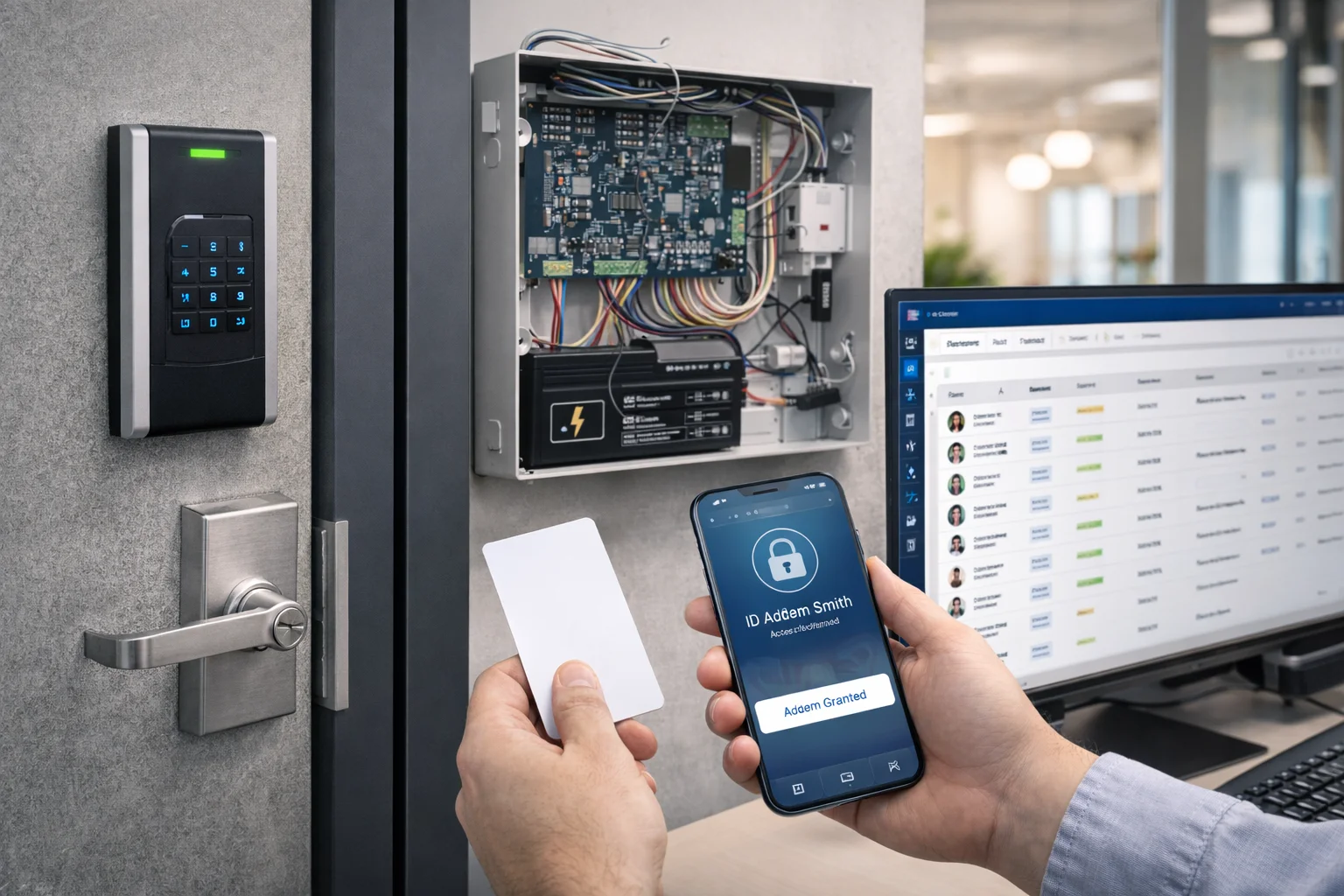
Commercial access control systems are built from several key components working together. This article explains the core parts of an access control system, what each one does, and why understanding them helps businesses plan smarter and avoid costly mistakes. Written for business owners, property managers, and commercial project teams.
Why Understanding System Components Matters
Access control systems often get described as “card readers on doors.”
That description is incomplete.
Commercial access control systems are made up of several connected components. Each one plays a specific role. When they are planned correctly, systems are reliable and scalable. When they are misunderstood, problems appear later.
Understanding the core components helps businesses make better decisions and avoid surprises during installation or expansion.
Credentials: How Users Identify Themselves
Credentials are what users present to gain access.
These may include key cards, fobs, mobile phone credentials, PIN codes, or biometric identifiers. Credentials are assigned to individuals and linked to specific permissions.
In commercial environments, credentials must be easy to issue, revoke, and manage. This flexibility is one of the biggest advantages access control has over traditional keys.
Readers: Where Access Is Requested
Readers are installed near doors and entry points.
Their job is simple. They read the credential and send that information to the system for a decision. Readers may support cards, mobile credentials, PINs, or multiple methods at once.
Reader selection affects usability, durability, and future upgrade options. That’s why reader choices should match how a building is used.
Controllers: Where Decisions Are Made
Controllers are the brain of the access control system.
They receive information from readers and decide whether access should be granted based on programmed rules. Controllers also communicate with locks, alarms, and other connected systems.
Controller placement, capacity, and network connectivity all affect system reliability. Poor planning here often leads to scalability issues later.
Door Hardware and Locks: The Physical Layer
Electronic locks and door hardware physically secure the door.
This may include electric strikes, magnetic locks, or integrated locking hardware. Door position sensors and request-to-exit devices are often part of the system as well.
Door hardware must match the door type, frame, and fire code requirements. These details are easiest to address early in the project.
Power: Keeping the System Running
Access control systems require consistent power.
Power supplies, backup batteries, and sometimes UPS systems keep doors operational during outages. Power planning also affects safety and code compliance.
Reliable power design is critical, especially for exterior doors and life-safety-related access points.
Network Connectivity: Enabling Central Management
Most modern access control systems rely on network connectivity.
The network allows centralized management, remote updates, and system integration. It also supports cloud-based platforms that reduce on-site hardware requirements.
Network planning must account for security, reliability, and future growth.
Software: Where Everything Comes Together
Access control software provides the interface for managing users, doors, schedules, and reports.
This is where administrators grant access, review logs, and respond to events. Software design affects ease of use, reporting depth, and integration with other systems.
Choosing the right platform helps ensure long-term usability.
How These Components Work Together
Each component on its own is simple.
Together, they form a system that controls access, records activity, and adapts to change. Problems usually occur when one component is selected without considering the others.
Balanced system design is key to long-term success.
Why Component Knowledge Helps with Planning
When businesses understand system components, planning improves.
Expectations are clearer. Scope is easier to define. Expansion becomes predictable instead of disruptive.
This knowledge helps projects stay on schedule and within budget.
Final Takeaway
Commercial access control systems are not single devices. They are coordinated systems made up of multiple components.
Understanding how readers, controllers, credentials, hardware, power, and software work together helps businesses plan smarter and avoid future limitations.
Good access control starts with good system design.